
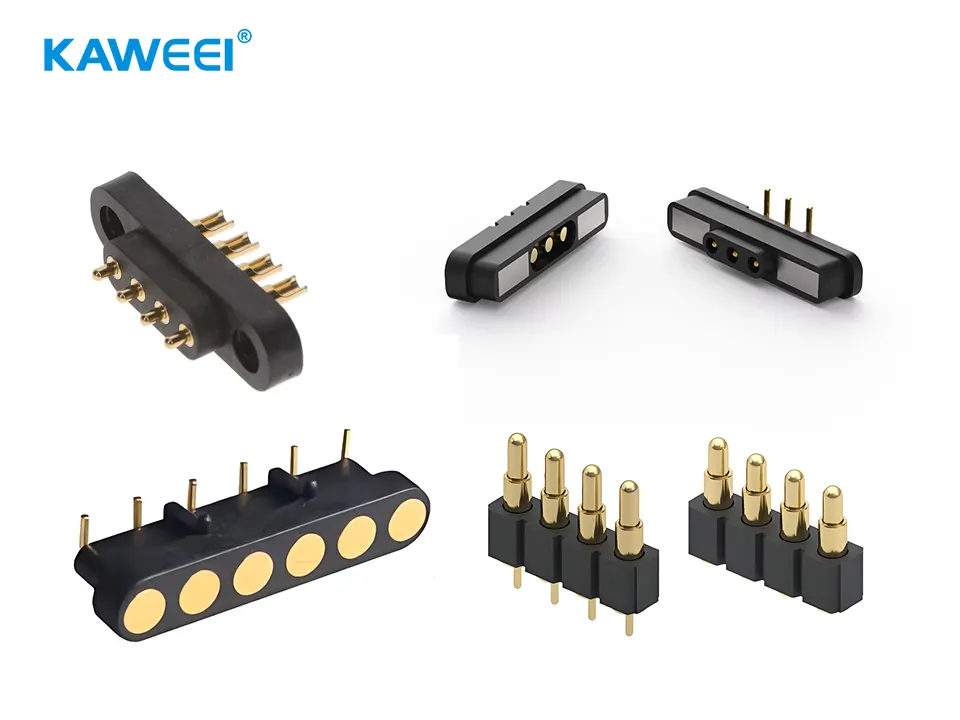
Spring connector is a broad term, not one interchangeable connector design. In wire harness and electronics projects, it may refer to a spring-loaded plunger contact (often called a pogo pin), a leaf-spring contact, or a spring-clamp terminal. These designs create contact force in different ways and connect to different interfaces. Identify the structure and mating parts before comparing specifications or requesting a quote.
In this guide, I explain the main spring-contact families, where they are commonly used, and what I recommend confirming when selecting a connector for a wire harness. The right choice depends on the electrical load, mating geometry, available space, environment, and termination method in the actual assembly.
What does “spring connector” mean?
A spring connector uses an elastic metal element to maintain or provide contact force when two conductive parts mate. The phrase describes a working principle, but suppliers may use it for several different product families. A pogo pin, a spring leaf contact, and a spring-cage terminal are not the same component and are not automatically compatible with the same mating part.
For a wire harness, start by defining the connection interface: wire-to-board, board-to-board, a removable module contact, a test point, or a conductor clamped in a terminal block. If the design uses a spring-loaded plunger contact, see our separate pogo pin guide for that connector family.
Common spring connector types
| Type | How the spring works | Typical interface to confirm |
|---|---|---|
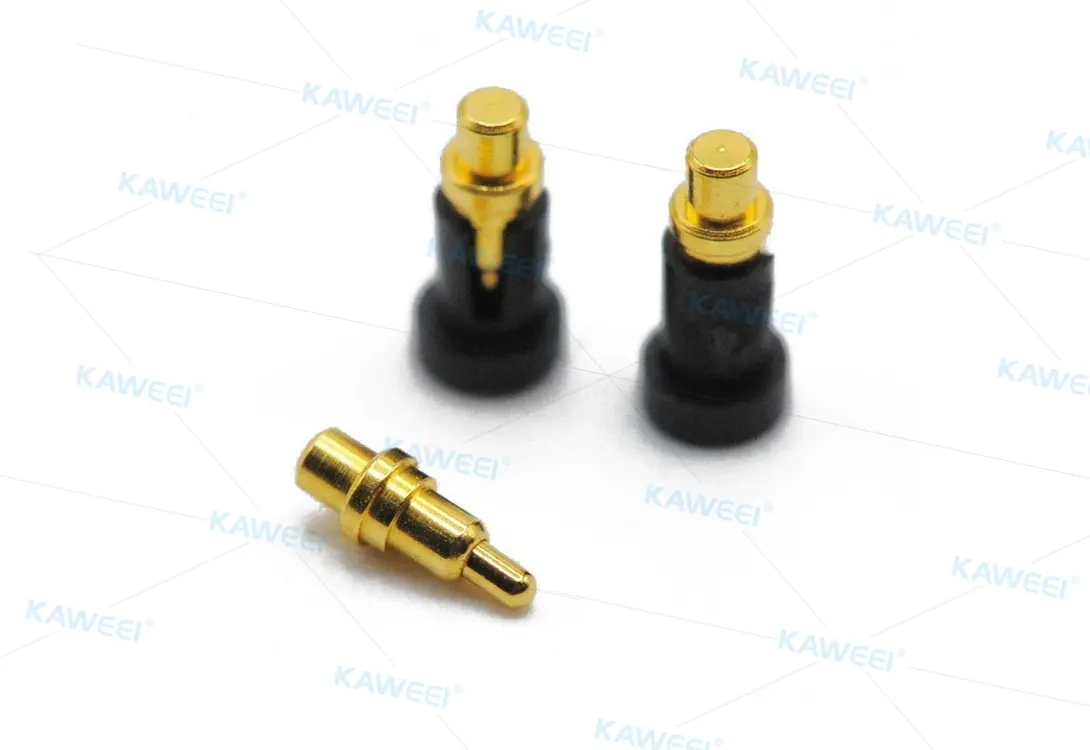
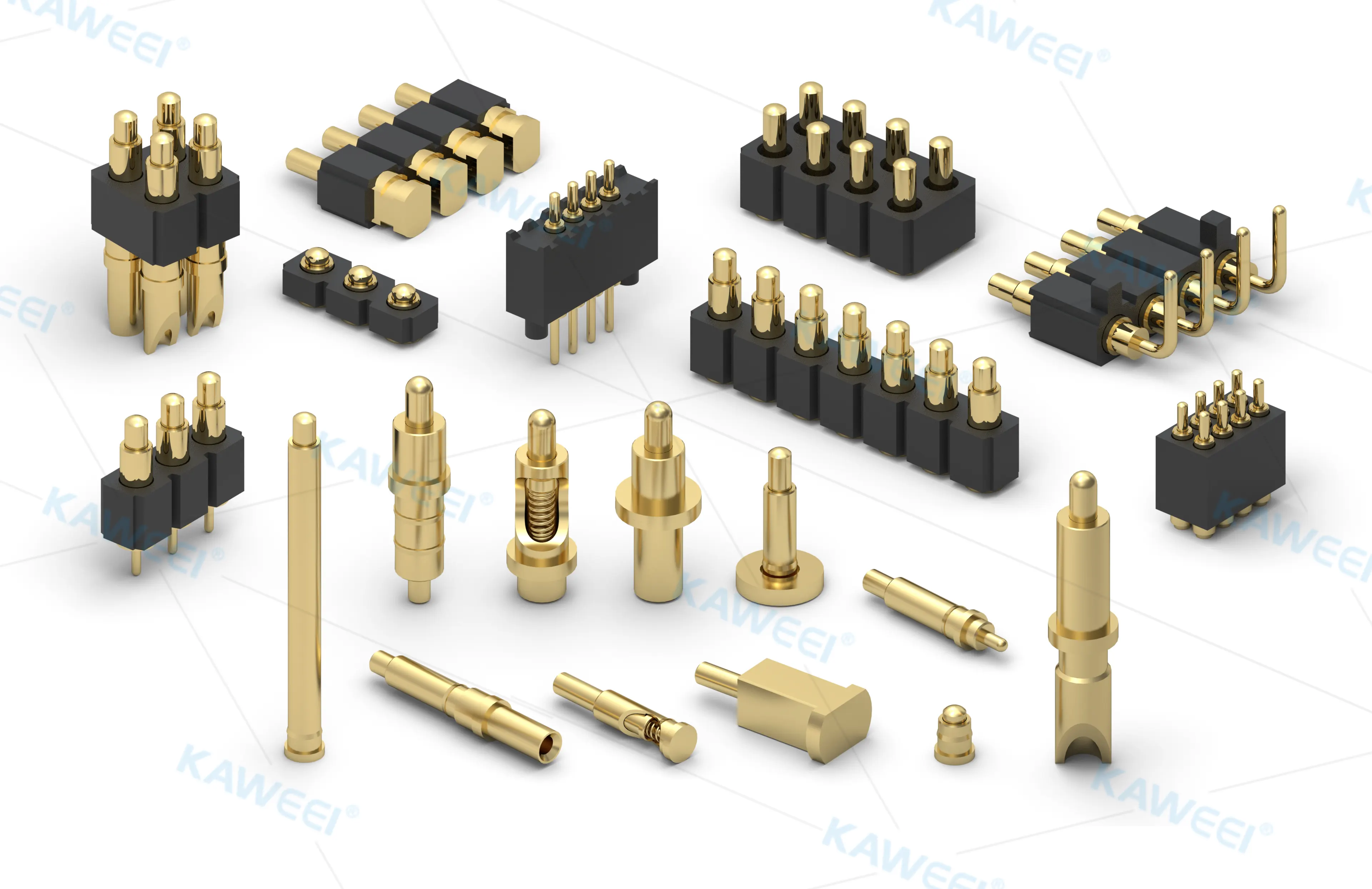
| Spring-loaded pin (pogo pin) | An internal spring lets a plunger move axially inside a barrel and press against a mating pad or contact. | Plunger-to-pad, pad layout, contact travel, and the pin's mounting or wire termination. |
| Leaf-spring contact | A formed metal beam flexes as it meets a mating contact or surface. | Contact overlap, insertion direction, beam deflection, and the mating surface. |
| Spring-clamp or spring-cage terminal | A spring mechanism clamps a prepared conductor or ferrule inside a terminal. | Conductor type and size, strip length, ferrule requirements, and the terminal's specified entry method. |
Product terminology varies between manufacturers, so compare drawings and datasheets rather than names alone. A spring-cage terminal that clamps a wire is not a substitute for a pogo pin that mates with a contact pad. For a broader overview of pogo-pin construction and applications, see this spring-loaded pogo pin guide from Same Sky.
Where are spring contacts used?
Spring contacts are used where a design calls for a compliant, separable, or space-conscious electrical interface. Depending on the connector family and product design, applications may include battery modules, sensors, removable electronic modules, test fixtures, compact consumer devices, and selected automotive or industrial assemblies.
These are examples of application areas, not a statement that every spring connector suits every environment. Current, temperature, contamination, vibration, mating frequency, and retention requirements must be checked against the selected part's documentation and the complete assembly design.
What should you check when selecting a spring connector?
I recommend reviewing the following items with the connector manufacturer and the wire harness designer. The values and acceptance limits must come from the approved design and the selected part's datasheet.
- Connection interface: Define what mates with the contact, including pad, pin, wire, ferrule, or terminal block.
- Electrical requirements: Confirm operating current and voltage, contact resistance limits, and the applicable temperature range for the chosen part and application.
- Mechanical travel and force: For a plunger or leaf contact, check the working deflection, compression range, and contact-force requirements in the manufacturer's documentation.
- Layout and packaging: Specify pin count, pitch, footprint, overall dimensions, mating direction, and the space available for the harness and housing.
- Wire termination: State conductor construction and size, insulation details, and the required termination method, such as a crimp, solder, SMT, or through-hole connection where supported by the selected part.
- Environment and use: Describe expected vibration, shock, moisture, dust, chemicals, temperature, and mating frequency. Verify suitability for the actual conditions rather than relying on a general product-family description.
- Materials and finish: Identify the required base material and contact finish from the design and application requirements. Do not assume all spring contacts are gold-plated or share the same corrosion performance.
For a complete harness assembly, connector selection is only one part of the review. The contact must work with the mating component, conductor, termination, housing, routing, and assembly tolerances. Our wire harness component selection guide and connector guide cover related interface decisions.
What to include in a spring connector RFQ
To help a supplier assess a spring connector or a harness assembly that uses one, provide the latest drawing, mating-part details, pin layout, electrical requirements, operating environment, expected mating frequency, and required wire termination. Identify any required plating or material by specification, and flag project-specific inspection or documentation needs. If the design is still being developed, a DFM review can help identify fit and assembly questions before release; see our wire harness DFM analysis.
At Kaweei, customization is discussed against the project requirements, including pin count, current rating, plating, and dimensions. Send us your drawing and requirements through our contact page so the proposed configuration can be reviewed for your application.


