
In an era of 5G, Wi-Fi 6, and Starlink, it’s easy to think the world is fully wireless. But behind every wireless signal is the RF Cable, the 'wired hero' of connectivity.
As global digitalization accelerates, RF cables have evolved. They are now the vital arteries connecting base stations, autonomous vehicles, and aerospace equipment.
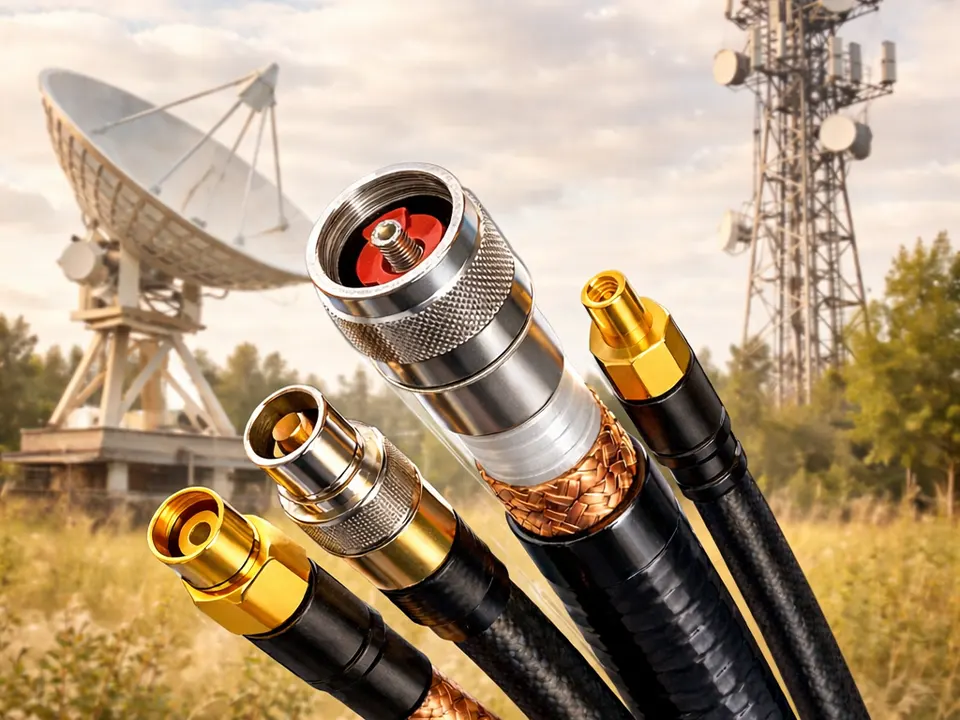
What is an RF Cable? More Than Just a Wire
An RF cable (coaxial cable) is a 'highway' for high-frequency signals. Unlike standard power cords, its purpose is to transmit high-frequency signals from point A to point B without loss in complex electromagnetic environments.
Selection Guide: 50 Ohm vs. 75 Ohm
Mixing these up causes signal reflection and equipment damage. Remember this:
50 Ohm: The Lifeline of Data.
- Uses: 4G/5G base stations, Wi-Fi routers, GPS.
- Focus: Power transmission efficiency.
75 Ohm: The Standard for Video.
- Uses: CATV, set-top boxes.
- Focus: Signal integrity and low distortion.
Why Demand is Surging for 2026?
5G/6G Physical Limits: Higher frequencies mean faster attenuation, requiring premium Low Loss cables.
Automotive Evolution: LiDAR and V2X communication in autonomous cars require dense networks of miniature RF assemblies.
Expert Advice: How to Choose?
Focus on these three metrics: Insertion Loss, Frequency Range, and Shielding Effectiveness. As a professional harness manufacturer, Kaweei provides high-performance RF solutions tailored to your needs.


