
In Kaweei's wire harness processing workshop, IPC/WHMA-A-620 is the "operating guide" we cannot avoid every day. Many clients ask during consultation: "Do your products comply with the IPC-620 standard?" For us, this is not just a certification issue, but the "safety bottom line" for every action such as stripping, crimping, and soldering in wire harness production.
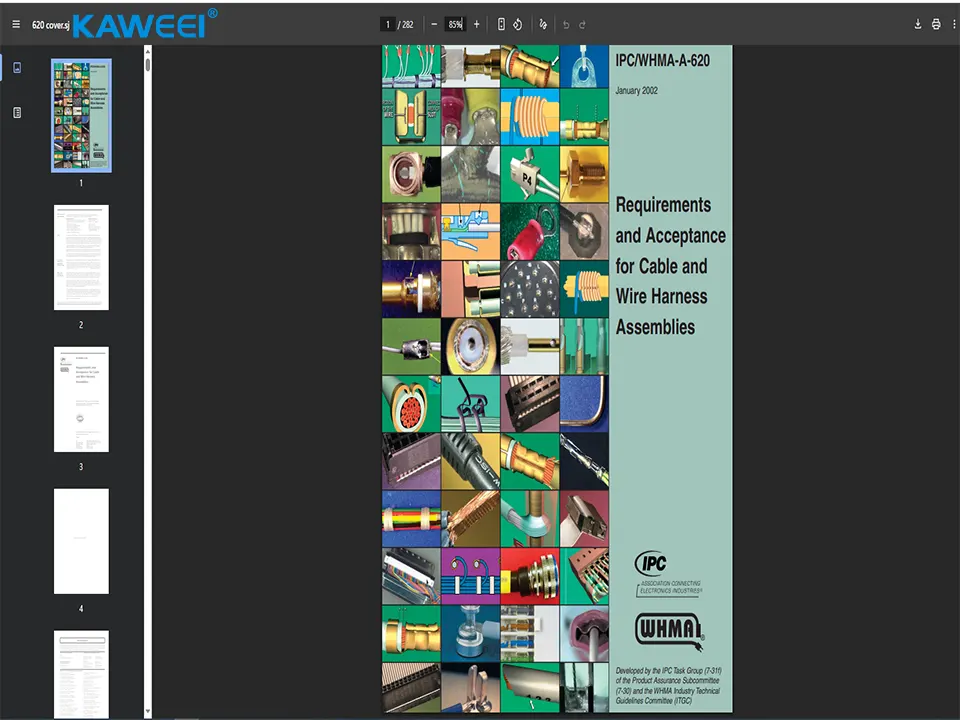
We don't just write the standard on the wall; we break it down into inspection actions for every process.
Why do we value IPC-620 so much?
IPC-620 is the only authoritative global standard for the wire harness industry. If electronic products are compared to a human body, wire harnesses are the blood vessels. If crimping is not proper (loose terminals) or stripping damages the core, the entire device may fail under long-term vibration or high-temperature environments.
How do we execute the standard in production (Class 2 vs Class 3)?
On the production floor, we select different levels based on your application scenario:
- Class 2 (Dedicated Service Electronic Products): Suitable for most home appliances and office equipment, requiring the product to operate stably under continuous use.
- Class 3 (High-Performance Electronic Products): Suitable for medical devices, industrial control, military, and aerospace fields. Here, wire harnesses must achieve "zero failure" in harsh environments.
At Kaweei, we don't default to producing at the lowest cost. Instead, we suggest a reasonable process level based on your product's application. For example, for medical harnesses, our requirements for pull-testing frequency after terminal crimping and microscopic inspection are far above the standard baseline.
How does Kaweei do it in practice:
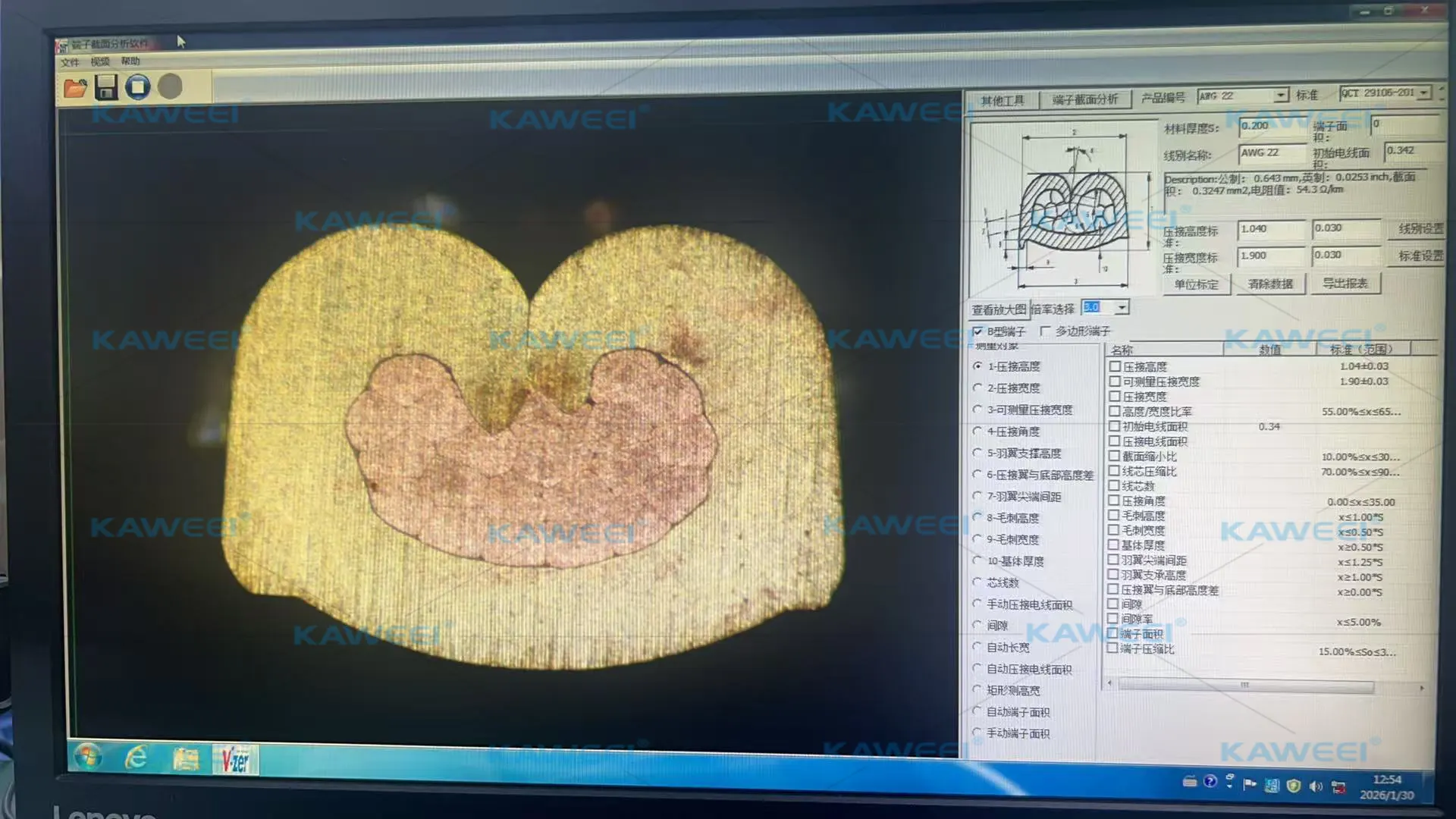
- Terminal crimping cross-section analysis: We perform cross-section checks to verify the crimp compression ratio, ensuring every copper strand is in the optimal stress state, not just "held in place."
- Stripping process: Strict inspection of stripping depth to prevent later fractures caused by blade damage to the wire core.
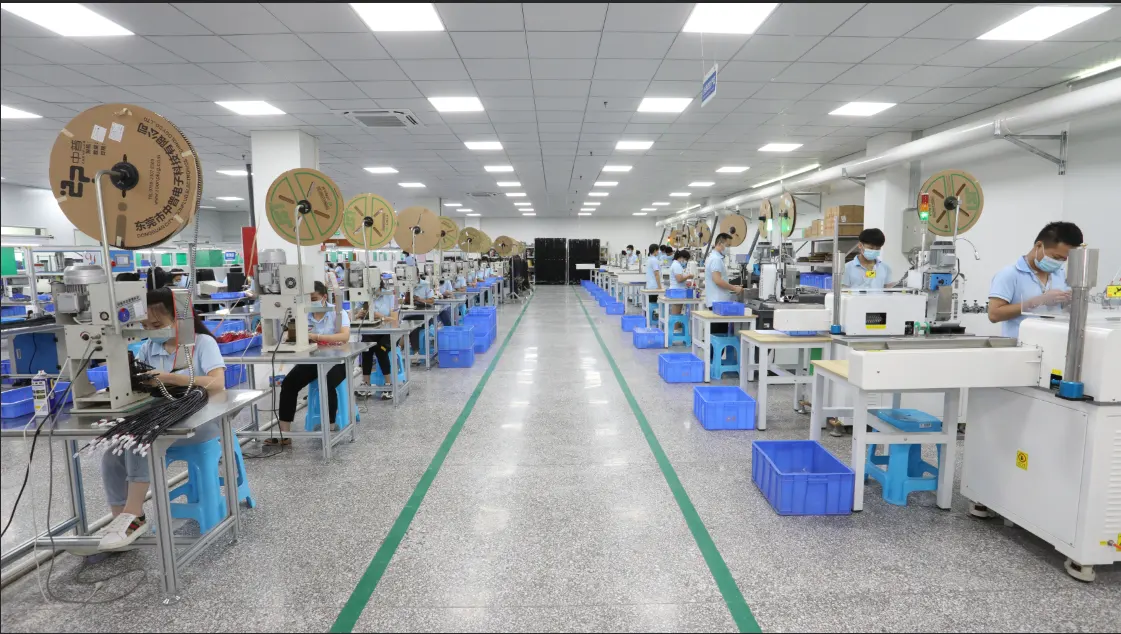
- Anti-static and environmental control: Managing the production environment according to standard requirements to prevent contamination.
If you have questions about whether your project needs to meet the IPC-620 Class 3 standard, or want to understand our specific inspection processes, please feel free to contact us. We will provide a professional process solution based on your drawings.
Frequently Asked Questions (FAQ):
Q: Do all the wire harnesses you produce comply with IPC620?
A: Our default production process fully aligns with the IPC620 Class 2 standard. If you have high-reliability requirements for Class 3, please specify clearly when providing drawings, and we will adjust the quality inspection parameters according to the stringent Class 3 standard.
Q: What are the consequences if the crimping height does not meet the IPC620 standard?
A: A crimping height that is too high will increase contact resistance, while one that is too low will cut the copper strands and reduce mechanical strength. Both situations are red lines in our process control.
Q: Do you provide relevant inspection reports?
A: For custom wire harness orders, we can provide detailed process parameters and test records upon customer request (including terminal pull-test reports).


