
Pigtail connectors are widely used in automotive wiring, industrial equipment, LED lighting, and electrical repair applications. They provide a reliable and efficient way to connect electrical circuits while simplifying installation and maintenance.
A pigtail connector is a short wire assembly with a pre-installed connector or terminal on one end. These connectors are commonly used for replacing damaged connectors, extending circuits, or integrating sensors and components into larger wiring harness systems.
In automotive and industrial environments, pigtail connectors help improve electrical reliability, reduce installation time, and minimize failures caused by vibration, moisture, or poor wire connections.
At KAWEEI, pigtail connectors are commonly used in custom automotive wiring harnesses, waterproof cable assemblies, and industrial control systems.
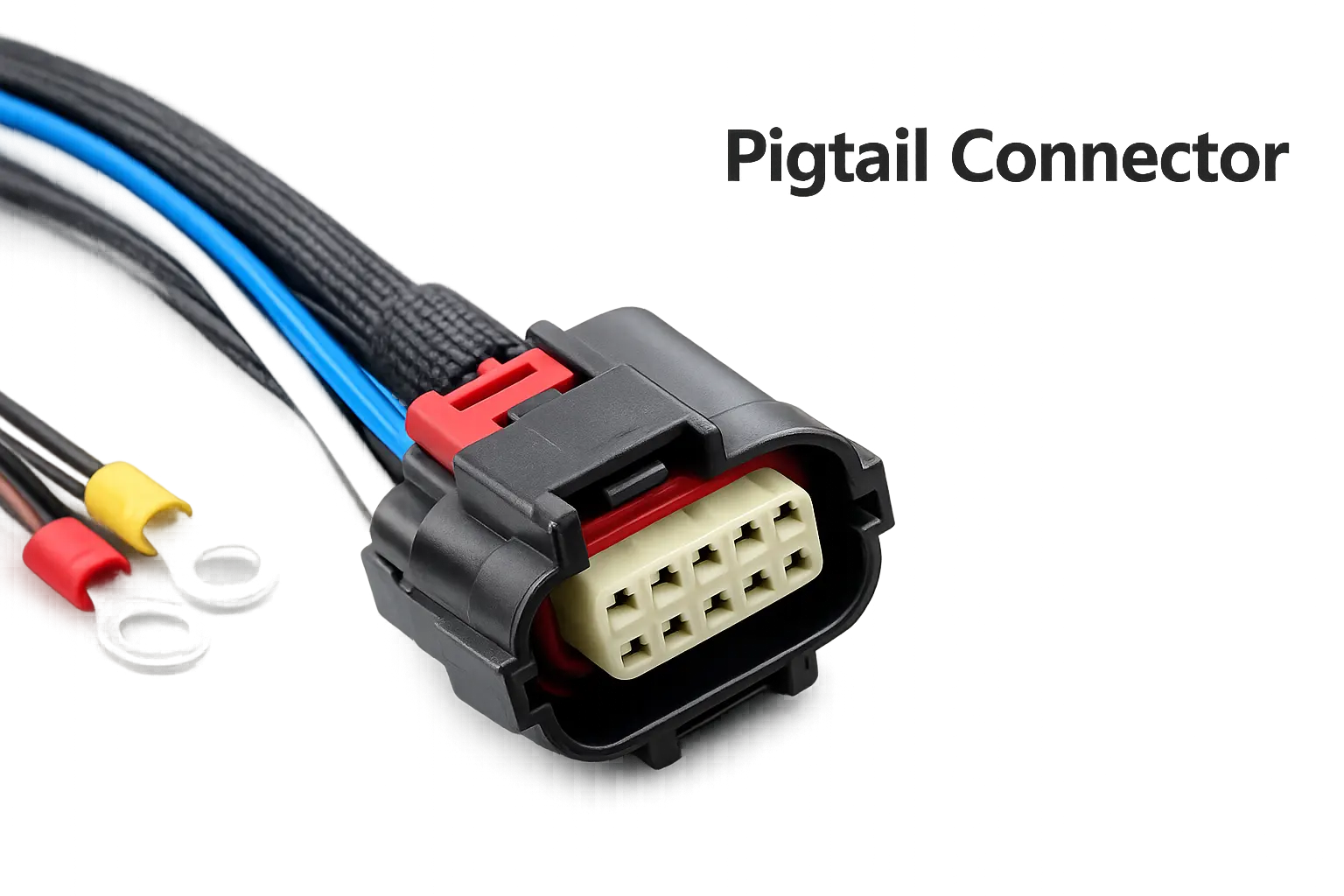
Table of Contents
- What Is a Pigtail Connector?
- Common Types of Pigtail Connectors
- Applications
- Pigtail Connector vs Butt Connector
- Choosing the Correct Wire Gauge
- Common Connector Failures
- Installation Best Practices
- Frequently Asked Questions
- Conclusion
Common Types of Pigtail Connectors
Automotive Pigtail Connectors
Automotive pigtail connectors are designed for vehicles exposed to vibration, heat, and moisture. They are commonly used for headlights, sensors, fuel injectors, and ECU systems.
Key features include:
- Waterproof sealing
- Heat resistance
- High vibration durability
- Secure locking structures
Waterproof Pigtail Connectors
Waterproof pigtail connectors are commonly used in outdoor, marine, and industrial environments.
These connectors may include:
- Silicone seals
- Rubber gaskets
- Heat shrink tubing
- IP67/IP68-rated housings
Waterproof protection helps prevent corrosion and electrical failure.
LED Pigtail Connectors
LED pigtail connectors are widely used in low-voltage lighting systems and LED modules, allowing faster installation and easier maintenance.
Pigtail Connector Applications
Pigtail connectors are widely used in:
- Automotive wiring harnesses
- Industrial automation systems
- LED lighting
- Medical equipment
- Marine electronics
- Sensor integration
- Power distribution systems
In automotive wiring harness manufacturing, pigtail connectors are often used for connector replacement, waterproof cable assemblies, and sensor integration.
Pigtail Connector vs Butt Connector
Although pigtail connectors and butt connectors are both used for electrical wiring, they serve different purposes.
A pigtail connector includes a pre-terminated wire assembly with an integrated connector, making it ideal for quick replacement and complex wiring systems.
A butt connector is primarily designed to join two wires together through crimping.
In automotive and industrial applications, pigtail connectors are preferred when waterproof protection, connector replacement, or vibration resistance is required.
Choosing the Correct Wire Gauge
Selecting the correct wire gauge (AWG) is important for electrical safety and performance.
| AWG | Common Application |
|---|---|
| 22 AWG | Signal wiring |
| 20 AWG | Sensors |
| 18 AWG | Automotive circuits |
| 16 AWG | Power wiring |
| 14 AWG | Higher current systems |
Using incorrect wire sizes may cause overheating, voltage drop, or connector failure.
Common Connector Failures
Several factors can reduce connector reliability.
Poor Crimping
Improper crimping may create unstable electrical connections and increased resistance.
Corrosion
Moisture exposure can damage terminals and reduce conductivity.
Incorrect Wire Gauge
Using undersized wires may lead to overheating and voltage drop.
Vibration Damage
Automotive and industrial systems may experience connector loosening over time.
Using high-quality materials and proper assembly methods significantly improves long-term reliability.
Installation Best Practices
Proper installation is essential for safe and reliable performance.
Recommended practices include:
- Use professional crimping tools
- Match the correct AWG size
- Avoid excessive wire bending
- Use waterproof sealing when necessary
- Inspect crimps for mechanical strength
- Follow IPC/WHMA-A-620 standards
At KAWEEI, strict quality inspection and crimp testing are used to ensure stable electrical performance in custom wire harness assemblies.
Frequently Asked Questions
Are pigtail connectors waterproof?
Some pigtail connectors are waterproof and designed for automotive, marine, and outdoor applications. Waterproof versions often include silicone seals and IP67/IP68-rated housings.
Can you reuse pigtail connectors?
Some pigtail connectors can be reused, but repeated crimping or long-term vibration exposure may reduce reliability. Replacement is recommended for critical applications.
What AWG is commonly used for pigtail connectors?
Common wire sizes include 18 AWG, 20 AWG, and 22 AWG for signal applications, while 14 AWG and 16 AWG are used for higher-current circuits.
Conclusion
Pigtail connectors play an important role in modern electrical systems by simplifying wiring installation, improving maintenance efficiency, and increasing connection reliability.
From automotive wiring harnesses to industrial automation and waterproof outdoor systems, selecting the correct pigtail connector is essential for long-term performance and safety.
KAWEEI provides custom wire harness manufacturing services, including automotive pigtail connectors, waterproof cable assemblies, and OEM wiring solutions for global customers.


