
Entering 2026, global copper prices have not seen the “mild correction” predicted by some analysts. Instead, driven by explosive demand for power infrastructure in AI data centers and supply disruptions in key South American mines, prices have entered “frenzy mode” again. As of this week, LME copper futures are hovering at a high of $12,000/ton, with some spot prices seeing significant premiums.
For wire harness manufacturers in the middle of the supply chain, this is undoubtedly a game of survival.
1. Where Exactly is the Copper Price Hike Hitting?
The volatility in copper prices isn't just a numbers game; like dominoes, it precisely hits the core components of the Wire Harness BOM (Bill of Materials):
-
Wire & Cable: This is the hardest-hit area. Whether it's UL Electronic Wire (e.g., UL1007, UL1015), Automotive Wire (AVSS, FLRY), or Power Cables, the cost of copper conductors typically accounts for 70%-80%. For every 10% rise in copper prices, the procurement cost of finished wire rises by at least 6%-8%.
-
Terminals & Connectors: Although a single terminal uses little copper, the volume is massive. Prices for brass and phosphor bronze strips fluctuate with the market, passing stamping cost pressures directly to the connector unit price.
-
Plating Costs: Many harnesses require tin or silver plating. While this involves tin prices, the rise in the copper substrate often gives suppliers a reason to adjust the entire "processing fee" structure.
2. Industry Oddities: Suppliers Driven "Crazy" by Copper Prices
In such an extreme market, the supply chain has seen some absurd dramas. As a custom wire harness manufacturer committed to on-time delivery, the Kaweei procurement department recently had a laughable yet frustrating experience.
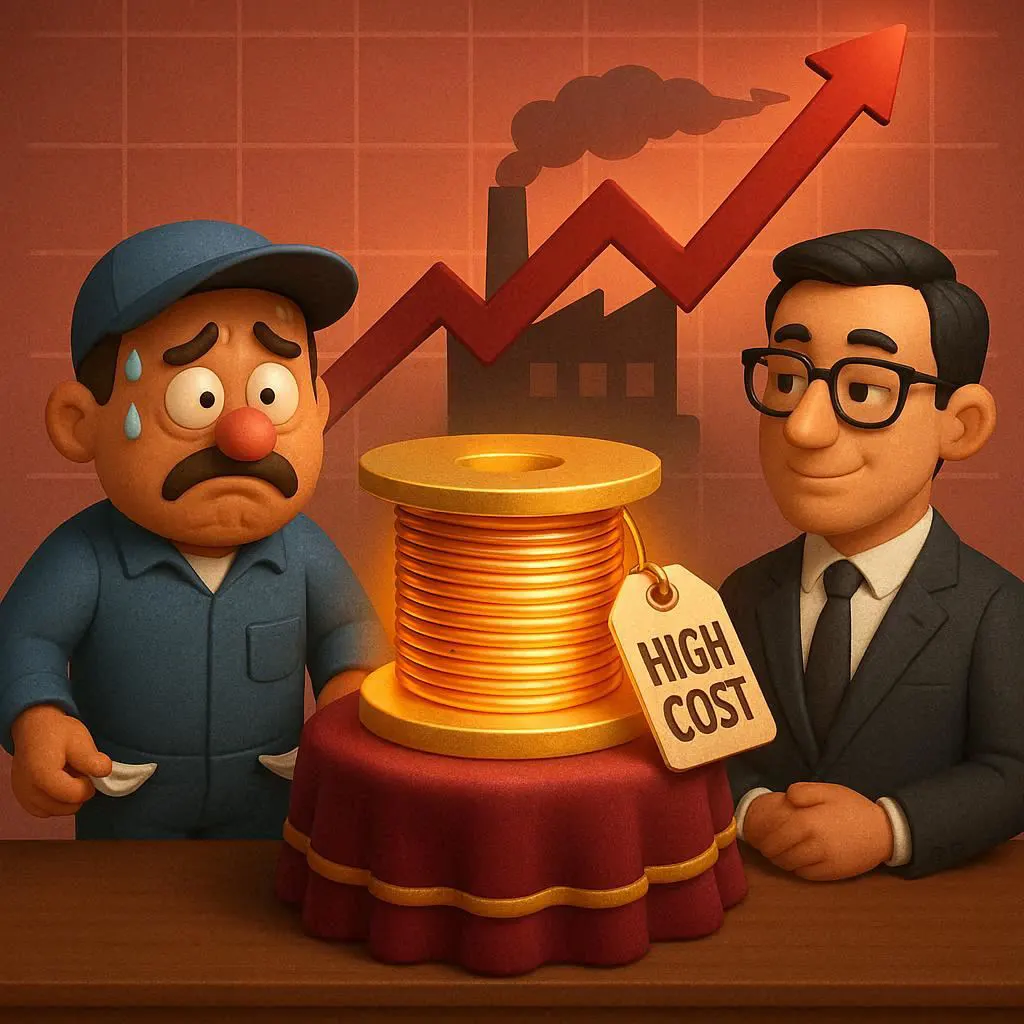
【Based on a True Story: A Procurement Manager's Rant】
Last week, Kaweei urgently needed a batch of special 16AWG shielded wire for a rush medical equipment order. We contacted Mr. Zhang, a wire supplier we've worked with for years.
Me: “Mr. Zhang, we placed the order three days ago, why hasn't production started? The customer is waiting!”
Mr. Zhang (heavy tone, as if the sky fell): “Brother, it's not that I won't produce, it's the copper... it burns my hands!”
Me: “Burns your hands? Is your factory AC broken?”
Mr. Zhang: “It's the price that burns! Copper went up another $200 today! Buying copper now feels like cutting my own flesh. If I buy today and it drops tomorrow, I've worked for free for six months. I'm waiting... waiting for a miracle correction.”
Me (helpless): “How long will you wait? My delivery date is in the contract!”
Mr. Zhang (solemnly): “Don't worry! As soon as copper drops, even just 0.5%, I'll go all in! Then I'll make the workers run the machines until sparks fly! I won't delay you!”
Me: “...”
The Ending: Mr. Zhang's “miracle correction” never happened; copper rose another $100 the next day. He bought the copper with tears in his eyes, grumbling while rushing our order. Of course, thanks to strong supply chain management, Kaweei delivered the harnesses to the customer on time.
While funny, this story reflects the huge dilemma for upstream suppliers regarding capital and inventory: “Dare not buy, can't afford to buy, afraid to get stuck.”
3. Kaweei's Strategy: No Gambling, Just Commitment
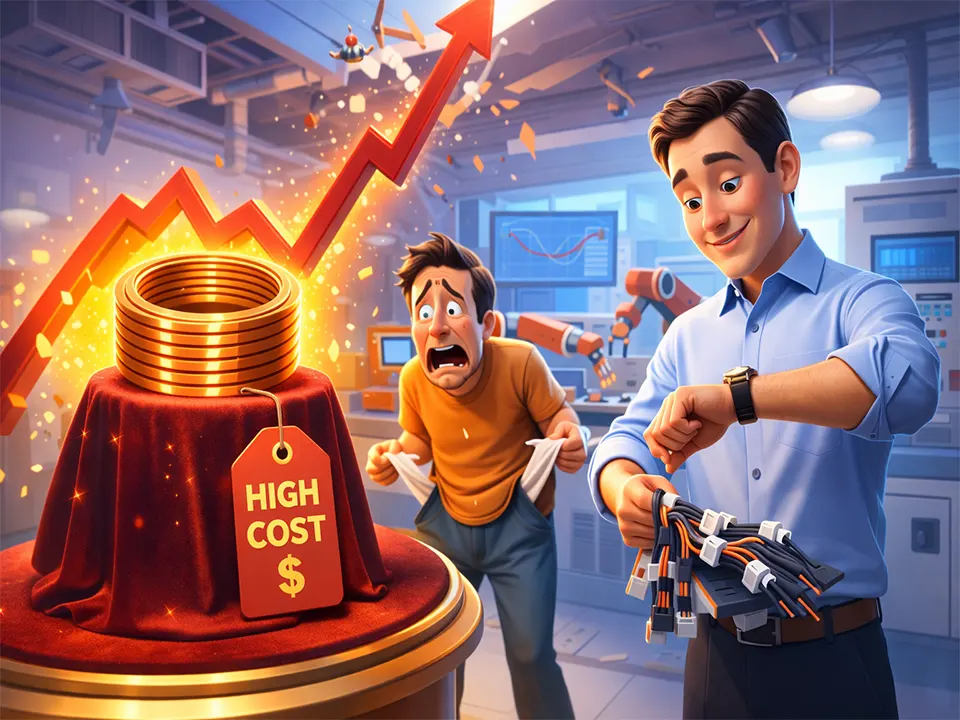
Facing the copper price wave of 2026, Kaweei chose a steadier approach, refusing to let customers pay for “supplier hesitation.”
We know customers want not just a wire harness, but certainty. Therefore, we have adopted three major measures:
-
Price Locking Mechanism: For long-cycle orders, we lock in copper costs directly via futures or spot markets. No matter how the market soars, we stick to the contract.
-
Strategic Inventory: For common UL standard wires and automotive wires, we maintain strategic inventory above "safety levels" to prevent upstream supply cuts due to capital issues.
-
Technical Cost Reduction (VAVE): When copper price hikes are irreversible, our engineering team actively helps customers optimize designs. For example, within signal transmission limits, we optimize wire gauge or shorten routing paths, using design to offset material increases.


